I started art journaling three winters ago at my kitchen bench in Hobart, with a borrowed pattern drawing book and a pen from the library’s lost property box. Nobody claimed either, so I took both home. I was not trying to learn a skill. I just liked how filling a page with small marks felt after a long shift shelving returns. Three years later, the practice still feels good, and it costs me almost nothing.
Here is the quick answer: pick a notebook you are not afraid of, set a ten minute timer, and fill one page with whatever you can draw. I am no expert, just someone who kept going because she liked it.
What Is Art Journaling, Really?
An art journal is a visual journal that combines words, images, and colours in one place. It is more playful and personal than a polished sketchbook. Where a sketchbook is often practice for something else, an art journal is the thing itself: a form of creative self expression and an expressive outlet that does not answer to anyone. You can art journal using loose paper or a bound journal. Mine is a plain supermarket exercise book.
The idea of mixing notes, sketches and collected scraps is not new. For centuries, people kept commonplace books, copying out passages, pasting in clippings, and sketching things they wanted to hold onto. Leonardo da Vinci filled notebooks with drawings and written observations side by side. An art journal works the same way but makes the drawing as important as the words.
Art journaling is creative self care rather than a way to make exhibition pieces. It is a no holds barred space for experimentation. Nobody grades a journal page, and nobody sees it unless I choose to show them. It is a creative outlet without the need for formal artistic training. The journal can be a store-bought visual journal, an altered book, a junk journal made from envelopes and packaging, or folded printer paper clipped together.
A page in my journal from last July: a wobbly pen sketch of the view from the bus stop on Sandy Bay Road, three sentences about the cold, and a bus ticket glued in with a glue stick. Another page is just a bad drawing of my teacup with the month written above it in pencil. Both count. A page that incorporates colors, collage and handwriting all at once counts too. So does a page that is purely filled with one repeated pen pattern. There are no defined rules in art journaling.
Why Art Journaling Feels Good As Creative Self Care
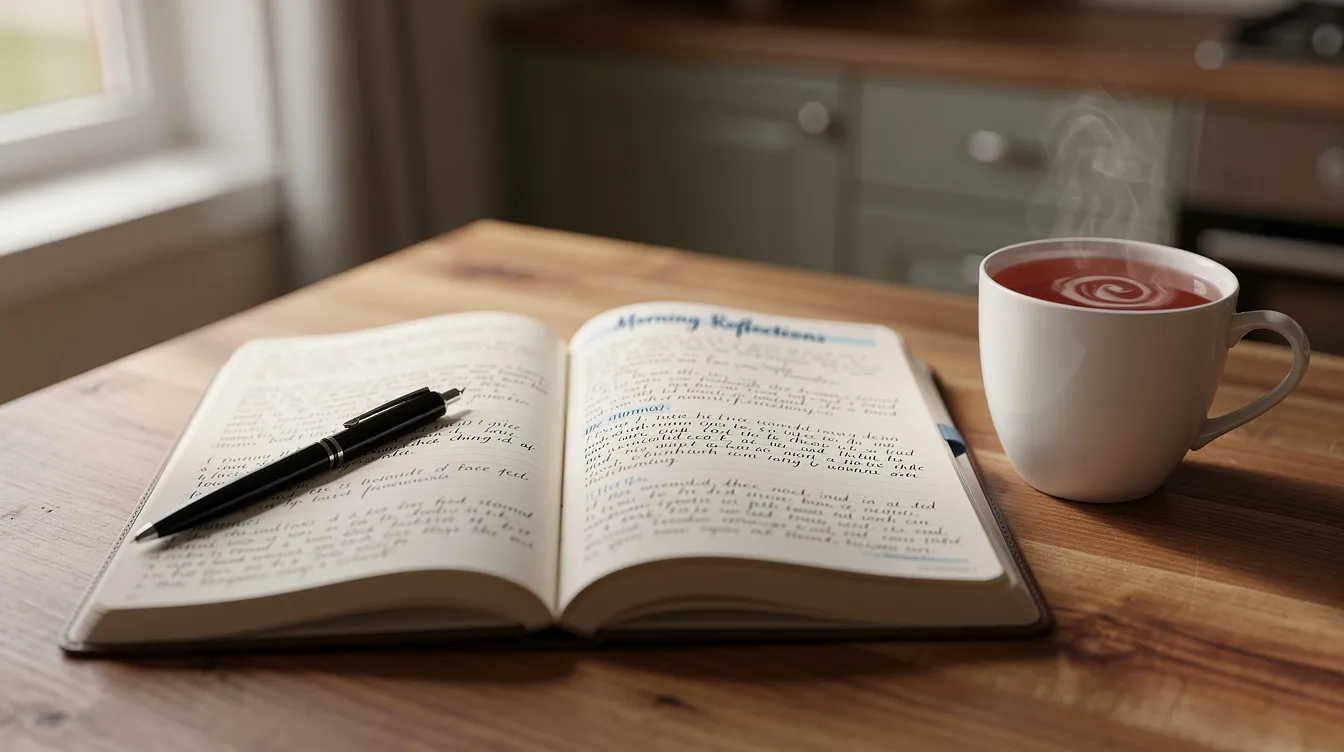
Most evenings after the dishes, I sit at the bench with a pen, my journal and a cup of tea. The radio is on. I draw for ten to twenty minutes. That is it.
Free art journaling helps me de stress, park racing thoughts on paper, and express feelings without needing to solve anything. A 2016 study with 39 adults found that 45 minutes of art making lowered salivary cortisol (a stress hormone) compared to levels measured before the session. I do not measure my cortisol, but I notice I sleep better on nights I draw. The practice helps reduce stress and promotes mindfulness. It can assist in emotional processing through non verbal expression; sometimes a dense page of scribbled lines says what a written journal cannot.
Pages I come back to: a worry page covered in layered pen pattern and two sentences I needed to get out of my head. A gratitude spread for a calm Sunday in March, six small rectangles each holding a sketch of something good. A colour-only mood page where I tested three watercolor washes and wrote nothing at all. Art journaling encourages self discovery and exploration of personal thoughts and dreams. It can clarify decisions and ground emotions, even when the page looks like a mess.
Practical benefits I have noticed:
-
Relaxation after a full day of shelving and scanning at the library
-
Reflection on recurring worries or small joys I would otherwise forget
-
A sense of progress when I flip back through old pages; I never critique a page on the day I draw it, and a week later it nearly always looks better than I thought
-
Occasional moments of flow, where the timer goes off and I have lost track of time entirely
I am a hobbyist, not a therapist. Art journaling supports wellbeing, but it does not replace professional help. Among the best coping skills I have found, drawing is one, but it is one tool among many, and some problems need a qualified person. If anxiety is the main thing on your mind, I have written about drawing and anxiety separately.
Different Types Of Art Journals You Can Try
I got stuck early on trying to make one journal do everything. Using different types lifted the pressure. Having multiple journals can enhance creative flow, because each one has a looser job.
-
Art journal: feelings, messy play, life snippets. The catch-all for self expression and everyday processing.
-
Visual diary: a place to develop ideas, test techniques, and make rough mockups for a larger piece you might attempt later.
-
Sketchbook: quick pencil and ink studies, everyday objects, urban sketches. A sketchbook is a book of blank pages intended for drawing practice. It differs from an art journal because the focus is on observational drawing rather than mixed media and personal reflection.
-
Junk journal: recycled envelopes, packaging, old notebook pages, receipts. Low cost, low stakes, high fun.
-
Altered book: a second-hand book from a Hobart op shop, worked over the printed text with gesso, pen and paint.
-
Travel or day-trip journal: short projects for holidays or a single local walk. A way to document and remember daily life details.
-
Bullet journals and journaling Bibles exist too, though my focus stays on secular, everyday practice.
These categories overlap. You need only one or two that match what feels good now. Mine, honestly, is one pen and one cheap notebook.
Choosing (Or Making) Your First Art Journal
The best journal is the one you will actually use. Buying an expensive book first can make you afraid to draw in it. A pocket-sized sketchbook can feel less intimidating for beginners.
Quick decision guide:
|
Criterion |
Option A |
Option B |
|---|---|---|
|
Size |
A5 (148 x 210 mm), portable, fits in a bag |
A4, larger surface for painting and collage |
|
Binding |
Spiral, lets bulky pages lie flat |
Stitched, sturdier over time |
|
Paper |
70-80 gsm, fine for pen and pencil |
200+ gsm, handles acrylic paint and wet glue |
|
Budget |
Supermarket exercise book, under $5 |
Strathmore Visual Journal, recommended for its durability, or Canson Mixed Media XL Journal (comes in sizes from 5″ x 8.5″ to 18″ x 24″) |
Warn: cheap paper can show pen ink through to the back, so test on the last page first. Stillman and Birn sketchbooks are known for high-quality paper if you want to invest later.
I rotate between a store-bought visual journal with 200 gsm pages and a small junk journal made from cereal boxes and old library flyers. You can make a free base from folded printer paper or brown paper bags, stapled or stitched with ordinary thread. Crooked pages, mismatched papers and visible stitches add character. I never tear pages out; the awkward ones show how far I have come.
Visual Journals, Junk Journals and Altered Books
I love mixing a “proper” visual journal with experimental junk journals and altered books. Each serves a different spirit.
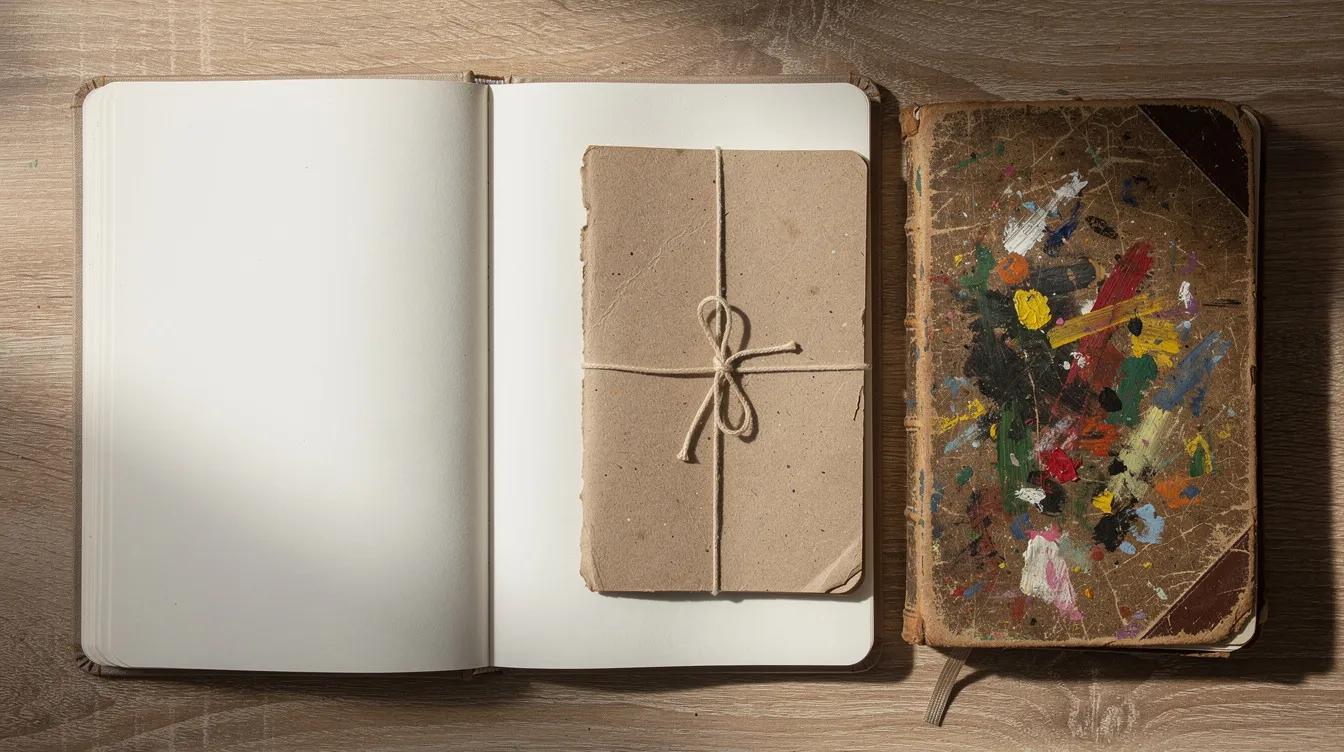
Visual journals use heavier paper, often labelled “mixed media” or “watercolour,” with weights around 200 to 250 gsm. They handle acrylic paint, watercolor and lots of collage well. They feel sturdy and “serious,” which is either comforting or intimidating depending on the day.
Junk journals are built from envelopes, magazine pages, packaging, old calendars and music sheets. The irregular, textured surfaces invite playful mark making. They are great for low-pressure days because the material was already headed for the recycling bin. Materials can be repurposed for art journaling: old magazines, wrapping paper, receipts, and other ephemera all find lots of use here. Art journaling often incorporates found papers and ephemera.
An altered book starts with a damaged or outdated hardback from an op shop or library discard, ideally from the 1970s or 1980s with a sturdy sewn spine. I prep them by gluing two pages together for thickness, brushing gesso over the printed text, and leaving some vintage illustrations peeking through. Some people dislike painting over books, and that is fine; there are plenty of other options. These projects are not museum-perfect, but they last a lifetime on a home shelf, which is enough for most of us.
Simple Supplies To Get Started Art Journaling
My early pages used very basic tools: one black pen, a pencil, and a ten minute timer on my phone. Paint and glue came later. Basic supplies for art journaling do not need to be expensive.
Core supplies:
-
Journal or base paper: cheap mixed media pad, junk journal, or altered book
-
Pens and pencils: a ballpoint or 0.5 mm black fineliner, ordinary HB pencil. A single pen forces me to think in line, shape and texture instead of reaching for color to rescue a page
-
Acrylic paint in a few colours: titanium white, Payne’s grey, a warm red, a leafy green. A small brush and an old store or library card for scraping paint. Acrylic, watercolor, and gouache paints are all commonly used. Common art materials for art journaling include mixed media, watercolor, and collage
-
Glue stick and basic scissors
If you want to use that one pen for structured pattern work, a small patterned section makes any journal page look deliberate. If you are curious, here is how to start drawing zentangles.
Optional extras to add slowly: coloured pencils, oil pastels, water-based markers, alphabet stamps, stencils, masking or washi tape, thread for stitching. Art journaling encourages experimentation with various art materials, but the benefit of starting small is that the focus stays on practice and play, not shopping. You can explore different styles, techniques and projects over time. Lisa teaches a lovely course on making coloring pages from scratch if you fancy a project like that.
Easy Art Journal Page Ideas For Beginners
My biggest wall was never skill but not knowing what to put down. Blank page fear is real. I keep a short handwritten list of prompts tucked into my journal and break the first page on purpose with a scribble or wobbly border. Art journaling can help overcome creative blocks. If you run out of ideas altogether, I wrote about finding inspiration when stuck.
Beginner-friendly ideas that take 10 to 20 minutes:
-
Today in three colours: choose three colours that match your mood, fill the page with blocks, stripes and circles, then add a few handwritten lines. Techniques like collage and watercolor washes are beginner-friendly ways to add beauty to any spread.
-
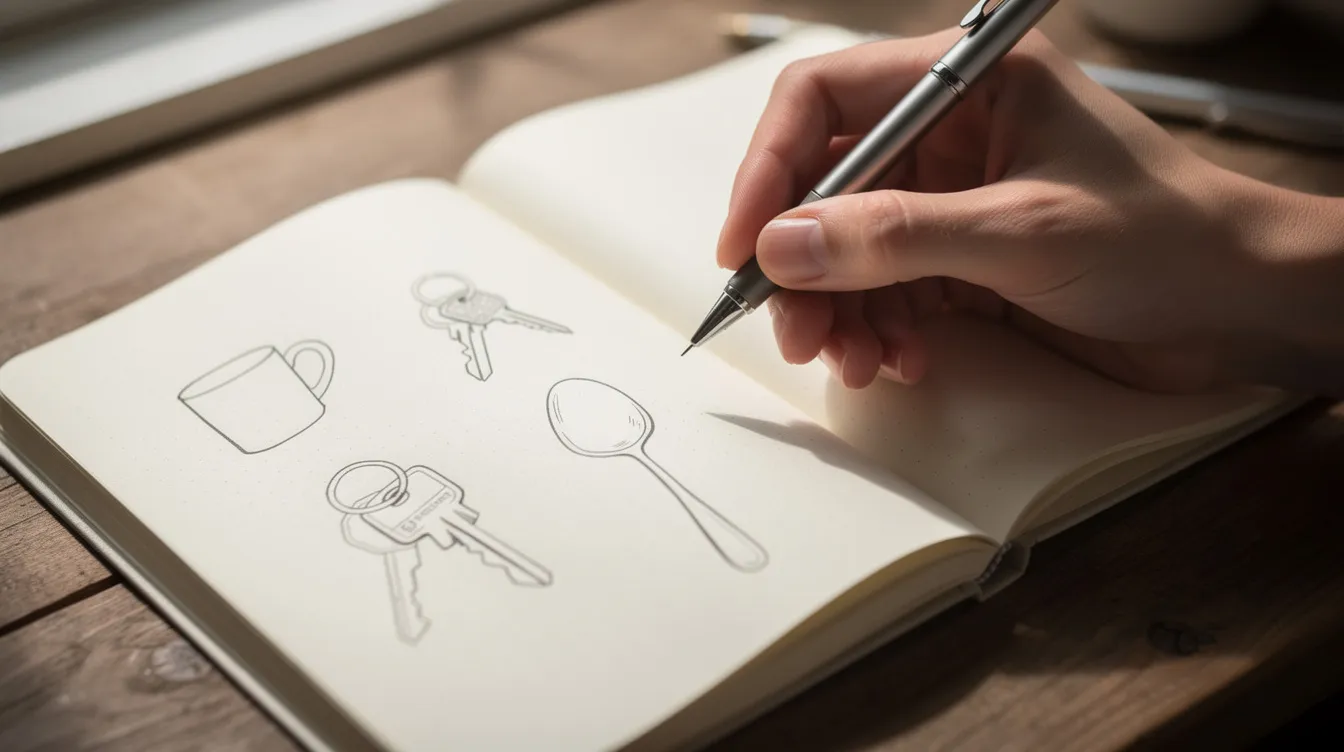
Tiny museum: draw five small objects from home (a mug, a spoon, your keys) and label them with the date and where you were sitting.
-
Collage weather report: use packaging, mail and magazines to describe the weather, with a couple of notes around it.
-
Gratitude grid: divide the page into six or nine rectangles, each a quick sketch or colour patch for something you are grateful for that week.
-
Found words: in an altered book or junk journal, circle interesting words already on the page and doodle around them.
-
One repeated shape: fill a page with leaves, circles or triangles, varying each slightly, in ink only.
These prompts are flexible. Repeat the same idea through the year and watch how your style and your artwork change. Each page is a form of creative self expression. Use them to explore what feels right, find inspiration in everyday objects, and create something that tells a small story from your life. Art journaling is suitable for anyone seeking a calm, low-pressure creative habit. I watch some videos from artists I admire, but I never try to copy; the prompts work better when I figure out my own answer. There are more starting points in these simple sketchbook prompts.
Building A Gentle Art Journaling Habit
My habit settled into short evening sessions over my first winters. Even a once-a-week ritual is valuable. The hardest part for me was always the third week, when the novelty wears off and the process feels ordinary.
-
Choose a small, predictable window (Sunday afternoon after lunch, or 10 minutes before bed) and attach it to something you already do. I draw after the dishes, and the dishes are the cue.
-
Keep a “grab and go” pencil case and the journal somewhere visible. Mine lives on the kitchen bench next to the pen, because if I have to hunt for it I will not draw.
-
Allow tiny sessions: a five minute doodle counts.
-
Work in more than one journal if it helps, perhaps a junk journal for messy days and a calmer visual diary for slower sketching. Engaging with art journaling can facilitate a flow state during creative activities, even brief ones.
A low-pressure goal like “touch my art journal three times a week” works better than page counts. Art journaling can document personal growth and emotions over time. Date each page or keep a tiny monthly index at the back. Flip through older pages to notice recurring colours, themes and marks. Do not skip the bad pages; some of my favourites came after days I thought I had nothing to draw. Art journaling serves as a sanctuary during difficult times, a bit of space where the world slows down. If you want more on building a daily drawing habit that lasts, I have written a longer piece.
Letting Go Of Rules and Enjoying The Process
I have unfinished journals on my shelf. I used to see them as failures. Now I see them as records of seasons in my life, each one a sign of where I was. You do not need to finish every journal you start.
Common worries and how I think about them:
-
Feeling you must finish every journal front to back before starting another. You do not. Art journaling is both a private and personal practice; the only person keeping score is you.
-
Comparing your pages with polished social media posts. Many public journals are made for an audience; yours is private, so let it be messy.
-
Thinking pages must be meaningful or deep to be worth making, or waiting to feel inspired. I rarely do; I set the timer and the ideas come once the pen is moving.
Art journaling fosters creative confidence and exploration. Play, curiosity, and the way it feels in the moment matter more than tidy outcomes. Try different types of journals over time, trusting preferences will shift with life, seasons and moods. You can start your own art journal tonight.
Permission slips:
-
You can abandon a journal and return to it years later
-
You can have as many journals as you enjoy without guilt
-
You can draw the same thing every day for a month
-
You can make a page that means nothing, just for the fun of the marks
-
You can experiment, play, and create without explaining it to anyone
Choose one simple surface and one material today, make a tiny page that feels good, and let that be enough.
FAQ
Do I need to be good at drawing to start an art journal?
No. The journal is for making marks and noticing things, not showing skill. Simple shapes, patterns and lists all count.
What is the best pen for art journaling?
The one you already own. A basic ballpoint or black fineliner is enough. Test it on the back page first for ink show-through. You do not need expensive supplies to find an expressive outlet.
How often should I work in my journal?
Whatever you can keep up. Small and regular beats long and rare; some weeks mine is only two or three sessions.
What if I hate a page I have drawn?
Leave it and move on. Draw over it later, turn it into a pattern, or keep it as a record of where you were. Tearing it out makes the next page feel more precious.
Can I add colour later?
Yes. Many of my pages start in pen only, and I add a little colour on another day if I feel like it. Resources for ideas are everywhere, but the best resource is usually the page in front of you.