Introduction: Why Sketchbook Prompts Help When You’re Stuck
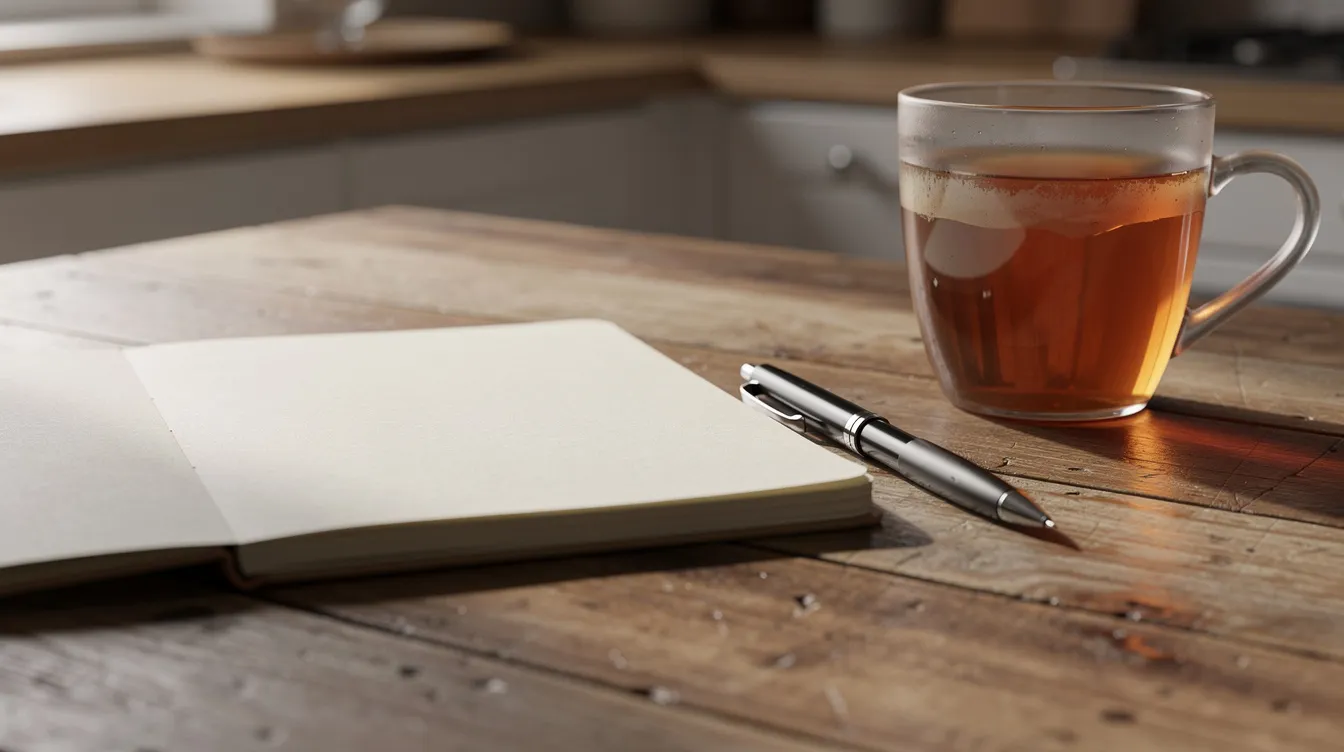
Here is the one prompt that rescues most of my evenings: pick a small object within arm’s reach, set a timer for ten minutes and draw only its outline. That is a sketchbook prompt in its simplest form: a small starting point or constraint that tells you what to draw, how long to spend, or what rule to follow, so you can skip the “what now?” problem and begin. I work part time at a public library in Hobart, Tasmania, and I draw at the kitchen bench after the dishes are done. On the nights when I sit down and my mind goes completely blank, a simple sketchbook prompt is the difference between staring at blank pages and actually making marks. If you like the outline idea, Wikipedia’s page on contour drawing is a handy place to read more.
Three winters ago I brought home a borrowed book on pattern drawing and a pen from the library’s lost property box, and I kept going because I liked it. The hardest part was never the drawing itself. It was opening the sketchbook and facing nothing. That is why prompts matter so much for relaxed drawing: they lower the pressure, help you get past creative blocks, and turn ten spare minutes into a small, steady habit instead of another evening of overthinking.
Everything here is low pressure and beginner friendly, written for adults and older teens who want a calm drawing habit, including people who think they cannot draw, busy people looking for ten quiet minutes a day, and anyone who draws to unwind rather than to train professionally. I am a hobbyist, not a teacher, so this is not a master list of 99 ideas. It is a smaller, more usable set of sketchbook prompts grouped into seven families: slow patterns and tangles, everyday objects, nature snippets, emotion words, time-boxed challenges, story fragments, and constraint prompts, plus a little help choosing the ones you will actually return to and building a mindful daily practice around them.
How I Chose These Sketchbook Prompts
I tested these prompt types in my own sketchbooks from 2022 to 2026 and kept what I actually return to on weeknights. My three part test: a good prompt has a subject, a limit and an end point, so I never have to rescue a page. Sketchbook prompts should be organized into themed categories so you can find ideas quickly and invent your own variations.
Choose a sketchbook that fits your usage needs and avoid sketchbooks that feel too fancy or precious. A sketchbook should feel like a place to experiment, low pressure and experimental, because some pages will be messy and imperfect. Here are my criteria:
-
Works when you can’t think of anything to draw
-
Fits in a tiny corner of a page, not just full page spreads
-
Encourages noticing real life and observation
-
Suits beginners and experienced doodlers
-
Supports a calm, mindful pace
-
Stays fresh when repeated across the week
7 Best Types of Sketchbook Prompts for Relaxed Daily Drawing and Improving Drawing Skills
I am ranking seven families of prompts for different moods and energy levels, not brands. The numbering is for clarity, so start anywhere.
1. Slow Pattern and Tangle Prompts
Pattern prompts are tangles, repeating motifs and borders. They are my go to after a long shift, and they are how I began drawing. You need only a pen and a few simple strokes. If tangles are new to you, my guide to starting zentangles covers the basics.
Why this prompt type stands out. Repeating small shapes becomes meditative fast and works when you are tired. These are the nights I switch my brain off and do not want to observe anything. Daily drawing habits like this can promote mindfulness and relaxation.
Best for. Evening unwinders, beginners scared of realistic drawing, and perfectionists who need permission to fill a page with simple marks. Pattern filling counts as real practice because you still make marks, judge spacing and choose what comes next. Students and kids enjoy these too. I dig into the question further in my post on whether doodling is real drawing practice.
Key strengths. Very little decision making, easy to fit into five minute pockets, and ugly pages turn into rich texture if you keep going.
Possible limitations. It can feel repetitive and does not teach proportion or perspective directly.
Example pattern prompts to try:
-
Divide a page into six boxes and fill each with a different stripe, dot or wave pattern
-
Draw a wobbly leaf outline and fill it with repeating lines instead of veins
-
Create a pattern using only straight lines across a whole spread
-
Fill a page with at least 45 decorated circles, each with a different mark inside
-
Draw a grid with one small doodle per square and no repeats
2. Everyday Objects on the Table
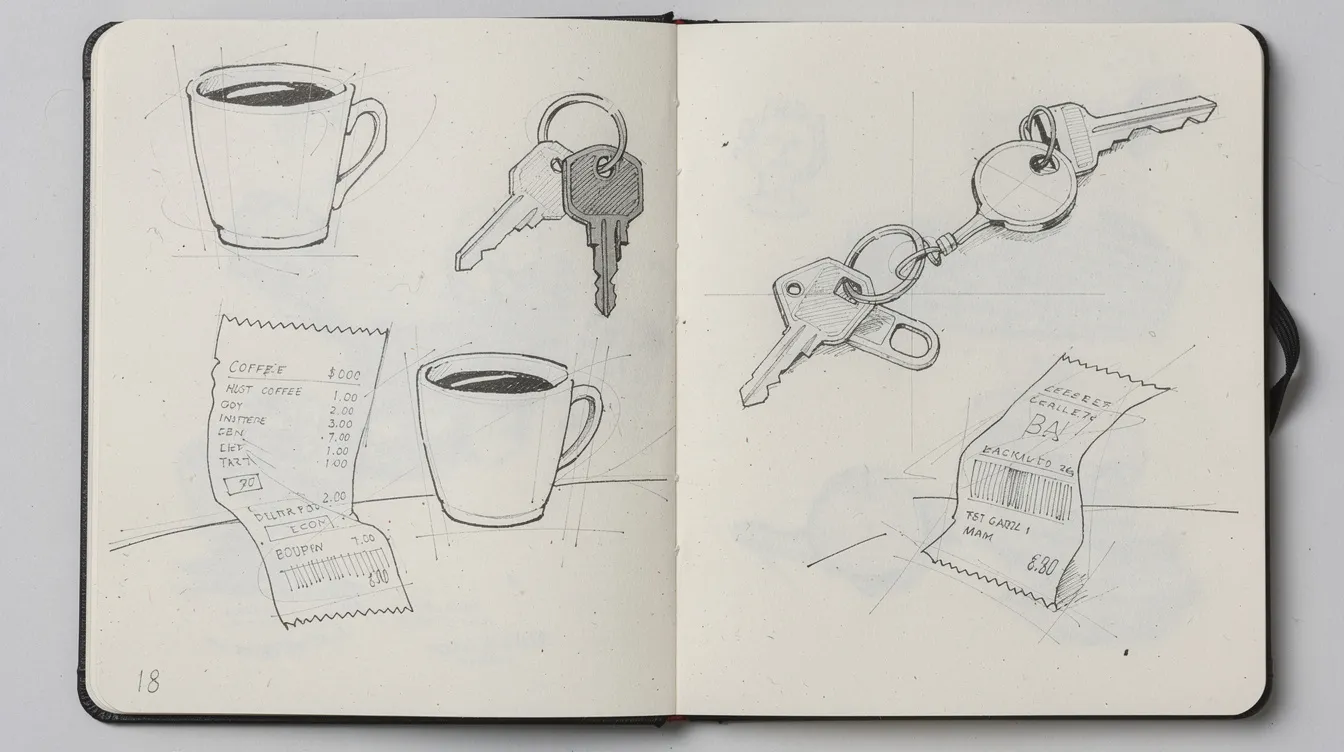
Each item in my bag is a tiny still life. Prompts from cups, keys, library cards, receipts and even vintage packaging make interesting subjects. Using vintage packaging as inspiration can help in sketchbook practice. Sketching familiar objects can improve attention to detail, and observation drawing aids in building accuracy and proportions.
Why this prompt type stands out. Drawing what is in front of you removes the stress of inventing, and it trains you to look closely at ordinary things. You can draw something ordinary in an extraordinary way by focusing on its shadow, or by drawing it as if it were object melting into the table.
Best for. People who say “my life is boring, there is nothing to draw,” beginners learning shapes and shadows, and anyone wanting a short kitchen table practice. I once talked to a friend who said she had no art class experience and nothing to sketch. I told her to draw her fruit bowl, and she filled a whole page.
Key strengths. Zero prep, and it teaches proportion without lessons. Three small mug drawings from different angles feel like a bigger result than one large picture.
Possible limitations. Mugs and forks can feel dull, and comparison with “proper” still life can creep in. Keep it loose.
Example everyday object prompts:
-
Draw your mug from three angles: top, side and tilted
-
Draw one shoe with all its laces, soles and wrinkles
-
Draw the shadow a jar throws on the bench, not the jar, and fill it in
-
Draw a pile of toys or books stacked on a table
-
Draw your favorite food on a plate, details and all
3. Nature Snippets and Tiny Collections
I gather leaves, seed pods and shells on short walks around Hobart. A small collection of nature bits on the bench is enough for a whole week of drawing.
Why this prompt type stands out. Natural objects have built in patterns and imperfections that suit slow line drawing, and collecting a few is part of the ritual. A flower or a curled leaf is never boring when you look closely.
Best for. Walkers, gardeners and anyone who likes organic shapes and textures.
Key strengths. Good for ink line work and light shading, easy to draw actual size in a small book, and it brings seasonal awareness. When autumn leaves fall, that is a whole month of prompts. Draw fruit and seed pods to explore new shapes.
Possible limitations. It needs some access to outdoors and is harder in bad weather. Keep lines soft and sketchy.
Example nature prompts:
-
Draw three leaves from the same tree and notice how they differ
-
Make a “shell museum” page with labels, even for chipped shells
-
Sketch the same house plant monthly on one page with short notes
4. One Word Emotion and Self Portrait Prompts
These prompts connect drawing to gentle emotional check ins. I am a hobbyist, not a therapist, and this is informal reflection, not treatment.
Why this prompt type stands out. A word like “restless” or “hopeful” skips the “what should I draw” problem and ties the drawing to how the day felt. It shifts the focus from what to draw to how you feel, and the images that come out are always a surprise.
Best for. Journalers who want small drawings, people who replay the day at night and would rather empty their head onto paper, and anyone inspired by writing and mood.
Key strengths. Flexible, as words can become marks, symbols or little scenes. It suits a tiny corner of a page and pairs well with music. Creating art inspired by music can spark new ideas, so try putting on a song and drawing what the word brings up.
Possible limitations. It can feel vulnerable, so keep some pages private. Some days call for a concrete subject instead. If you like the mood-word idea and want a looser structure for it, my beginner art journaling guide covers the basics.
Example emotion prompts:
-
Express one word for today using only shapes and lines
-
Draw a weather symbol that matches your mood and decorate around it
-
Draw a self portrait using abstract marks that illustrate how you feel, not how you look
5. Time Boxed Challenges (5, 10, 20 Minutes)
Timers create gentle urgency so you stop overthinking. Ten minutes is my default, fifteen if I am enjoying it, and I stop when the timer stops so I come back willingly. Time boxing prompts can enhance drawing skills and efficiency.
Why this prompt type stands out. A timer turns the goal into staying in motion, and it fits around work and busy evenings. The important part is showing up, not finishing a masterpiece.
Best for. People who “don’t have time” and anyone who stalls on the first line.
Key strengths. Quick decisions and letting go, and you can chain a few tiny prompts into one evening. You can complete two or three small drawings in one sitting.
Possible limitations. Timers stress some people, so pick gentle lengths. Results look messy, and that is part of the process.
Example time boxed prompts:
-
5 minutes: fill a page with tiny boxes, each with a different doodle
-
10 minutes: blind contour drawing of your hand, looking at the hand and not the page. My results come out lopsided and fun, and I like them anyway
-
20 minutes: draw a corner of your room, ignoring perspective
-
10 minutes: draw a car or a scene from a photo, as fast as you can
6. Story Fragments and Little Scenes
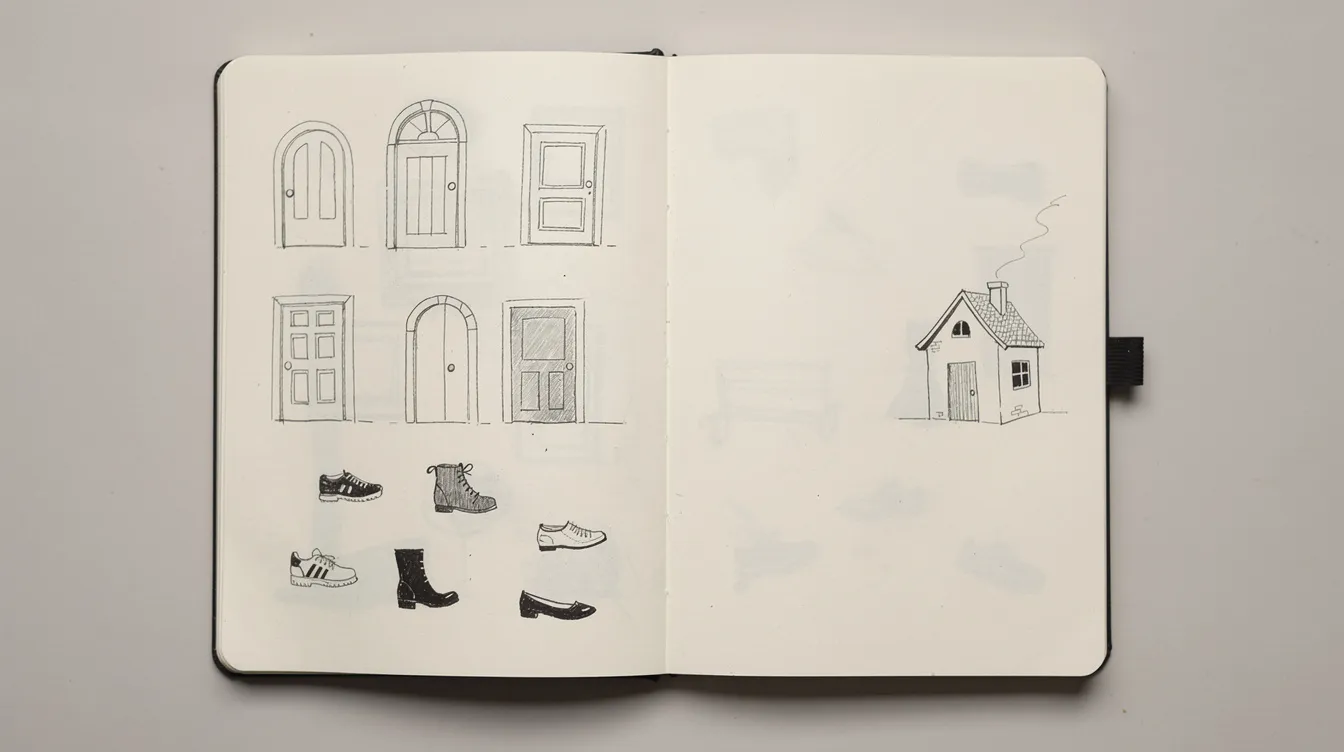
These are prompts that hint at a story without needing comic or art class skills: doorways, shoes by a mat, a bus stop at night.
Why this prompt type stands out. A hint of story makes simple sketches feel personal. Let your imagination and creativity explore a world on the page.
Best for. Readers who enjoy novels, films or journaling, and people who want to explore places without drawing full figures. Combining unrelated objects in a scene can boost creativity and originality.
Key strengths. It invites short labels or a sentence, suits themed sketchbooks, and gives practice with small compositions.
Possible limitations. Backgrounds and people can intimidate beginners, so start with objects and hints. It takes more energy than patterns.
Example story focused prompts:
-
Draw only the shoes by your door and imagine who wears each pair
-
Draw your front door from memory, then go and look. I always forget the letterbox
-
Draw a tiny house for an animal, a snail, wombat or magpie, with a chimney
-
Draw a character made of only shapes sitting in an odd pose
-
Illustrate an imaginary place, perhaps a cool monster’s den or a school for birds
-
One prompt suggests painting a historical building significant to you, so try sketching a building from your life in any medium
7. Constraint Prompts (Limited Tools or Rules)
Prompts built on simple rules: one pen, one colour, no lifting the pen, only circles. Drawing with your non dominant hand forces focus on basic shapes.
Why this prompt type stands out. Constraints cut choices and turn drawing into a small puzzle, which gives a strange freedom. I keep a black pen and one coloured pencil for this.
Best for. People overwhelmed by supplies and anyone who likes games. Keeping a list of things to paint or draw boosts creativity and builds confidence that you can make something with very little.
Key strengths. Rules make boring subjects interesting, and they work in any medium. Use the cheap pen you will not baby.
Possible limitations. Strict rules can frustrate. Weird is welcome, and I draw over mistakes instead of erasing them.
Example constraint prompts:
-
Draw a plant, face or kettle using only circles and ovals
-
Draw with your non dominant hand for 10 minutes
-
Draw without lifting your pencil in one continuous line, because drawing without lifting your pencil encourages flow
-
Draw a self portrait, an animal or a flower using only straight lines
Quick Comparison of the 7 Prompt Types
-
Slow Pattern and Tangle Prompts: tired evenings and meditative repetition
-
Everyday Objects on the Table: observation with zero setup
-
Nature Snippets and Tiny Collections: walkers, gardeners and lovers of organic shapes
-
One Word Emotion Prompts: gentle reflection with quick sketching
-
Time Boxed Challenges: busy days with only 5 to 20 minutes
-
Story Fragments and Little Scenes: readers who enjoy narrative and place
-
Constraint Prompts: shaking off perfectionism and supply overwhelm
How to Choose the Right Sketchbook Prompts for Today and Overcome Blank Pages
Pick the prompt before you sit down, because choosing is where evenings get lost. I keep a list on the last page of my sketchbook and add a line whenever I think of one, usually while shelving at work.
Choose based on your energy level. Keep a short list of your favorite sketchbook prompts for different moods or energy levels. Exhausted nights get patterns, livelier weekends get story scenes or nature collections. Sketchbooks help build a habit of creative thinking when you match the prompt to what you can actually manage.
Choose based on time available. Match prompts to 5, 10 and 30 minute windows, and chain two short object sketches across a paper spread.
Choose based on emotional needs. Soothe with patterns or nature, process with emotion words or story fragments. Keep certain pages private, as this is informal reflection, not therapy. Here is the formula for inventing your own: any ordinary noun, plus one limit, plus a time. “Teaspoon, one line, five minutes.” That is a complete prompt. You can use any inspiration from the world around you. If anxious nights are what send you to the sketchbook in the first place, my post on drawing for anxiety goes into that side of things more gently.
Which Sketchbook Prompts Are Best for You?
-
Choose Slow Pattern and Tangle Prompts for a low pressure wind down before bed
-
Choose Everyday Objects or Nature Snippets to gently improve your drawing skills from real life
-
Choose Time Boxed Challenges if you simply want to draw something most days
-
Choose Emotion Words or Story Fragments if you like the sketchbook as a quiet visual diary
-
Choose Constraint Prompts when you feel stuck, bored or overwhelmed by supplies
Final Thoughts
The best prompts are the ones you will use on an ordinary Tuesday night. There is no ranking of artistic worth here, only usefulness for a calm habit.
Do not tear out pages you dislike. I used to and regretted it, because the bad pages show where I started. Some pages in a sketchbook will be messy and imperfect, and that is the point. Treat it as a record of showing up, not a gallery. Write the date and prompt under each drawing. If you want to turn prompts into a routine, prompts are the easy part, and the habit is mostly about making the start small. I wrote more about building a daily drawing habit that lasts.
Treat your sketchbook as a quiet companion, not a test. Pick one prompt from this list tonight, and I hope it gives you an easy place to begin; set a timer, and see what happens on the page.
FAQ: How to Find Ideas
How many sketchbook prompts do I need to get started?
Five is plenty. Write them on the back page and work through them in any order.
Should I use pencil or pen for prompts?
Either works, but I lean toward pen because it stops me erasing and fiddling. Start with pencil if pen feels scary.
What if my drawings from prompts look bad?
Mine often do. The point is to get your hand moving, so judge the session by whether you showed up.
How long should one prompt take?
Ten minutes is a good start, short enough not to dread. Go longer only if you are enjoying it.
Can I repeat the same prompt?
Yes. Drawing your mug again a month later shows how your lines have changed.