
I have drawn almost every evening for three years. Not long sessions, not polished artwork, just one small page at the kitchen bench before bed. Daily drawing establishes a creative routine that has quietly changed how I spend my evenings, and this post is everything I have learned about making that habit stick.
Why I Choose a Daily Drawing Habit
I draw for enjoyment, not for a career. For me, daily drawing means making art regularly in a low-pressure way, sometimes for ten minutes, sometimes just long enough to fill a page with small repeated marks or a loose doodle. I work part time at a public library in Hobart, Tasmania, and three winters ago a patron returned a book on pattern drawing with a pen tucked inside. Nobody claimed either, so I took both home. I was not trying to become an artist. I just liked how a page of small repeated marks felt to make, and I kept going.
If you are a beginner, a busy adult trying to find ten quiet minutes, or a teen who wants a calm creative habit without turning it into a career plan, this is the version of drawing I mean. Drawing regularly encourages creativity and experimentation with ideas, but for me the bigger draw is that daily drawing reduces stress and anxiety. After a shift at the library I sit down, open the sketchbook, and the day quiets. Research suggests drawing enhances cognitive function and boosts self-esteem, and I believe it, though I notice it mostly as a calm feeling rather than anything dramatic.
If you are a beginner wondering whether your scribbly pages count, they do. Accepting bad drawings is essential for development and learning. Every imperfect entry in my sketchbook taught me something, even if the lesson was just that I held the pen too tightly. Daily drawing can reduce stress and enhance mindfulness whether the page turns out well or not.
Does doodling count? Yes. A loose doodle while the kettle boils uses the same hand, eye, and attention as a formal sketch. It is real practice. I have written a separate post on whether doodling counts as practice, if you want more on that.
What follows is practical and beginner-friendly: building a daily drawing habit, finding time, keeping supplies simple, using easy exercises such as pattern drawing and blind contour, getting past blank-page days, tracking progress without pressure, and using online tutorials without letting them take over the fun.
I have missed days. I have missed whole weeks. Rest remains part of a sustainable habit, and I have never let a gap convince me to stop. The habit is not a streak. It is a direction.
How I Make Daily Drawing Feel Manageable
My first plan of an hour a night lasted four days. A small commitment to daily drawing is easier to maintain than ambitious plans, so I dropped to one page or just ten minutes, whichever came first. That version stuck.
Establish a routine by drawing at the same time daily and pin it to something you already do. Mine is the kitchen bench after the dishes. Habit formation lowers the barrier to starting a drawing practice because you stop deciding whether to draw and simply begin.
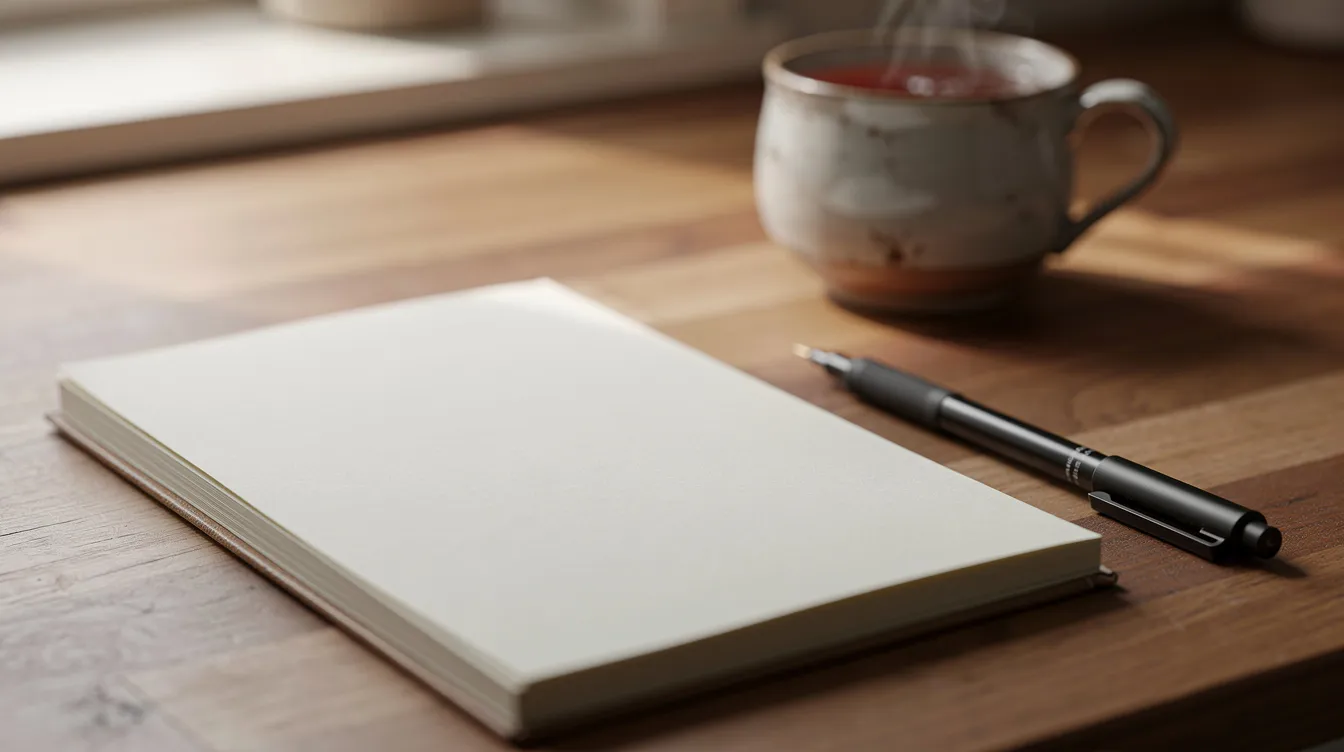
Keep supplies visible. My pen and book live in the drawer nearest the bench, so there is no hunting, no friction, no excuse.
My Just Ten Minutes Routine
I set a timer. One minute of relaxed marks to warm up, then I draw whatever I planned, and in the final minute I flip back a few pages and notice my progress. Committing to tiny drawing sessions can overcome initial resistance to start, and just ten minutes of drawing daily can yield beautiful results if you show up often enough.
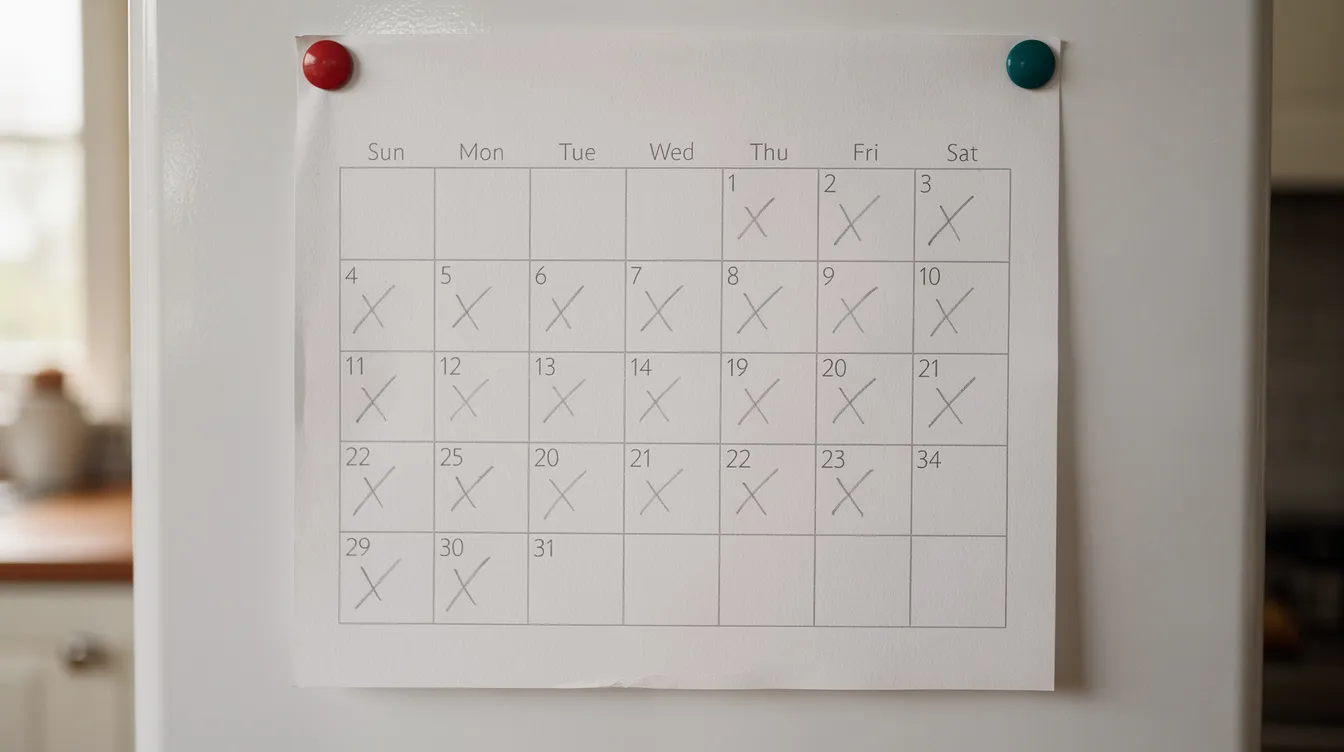
Frequent short sessions of drawing provide fast feedback loops for improvement. I stop when the timer ends, tick the calendar on the fridge, and close the book. Stopping on time makes tomorrow’s start easier. Drawing for just ten minutes daily improves skills without wearing you out. If you want a longer session on a free day, set a time limit of 30 to 45 minutes for drawing so you leave before fatigue arrives.
How I Protect My Creative Energy
Stop before drawing feels physically uncomfortable. Wrist pain, eye strain, and fatigue are signals, not challenges to push through. Take a rest day after an intense session if you need one.
Unfinished drawings can wait. If a page is going badly, release perfectionism and leave it for later. I leave half-done pages all the time. They sit in the book and sometimes I return to them weeks later with a better idea.
What I Need for a Calm Drawing Practice
Start with inexpensive supplies already available. The lost property pen did the job for me. Cost should never be the reason you do not draw. Paper texture does affect the experience, though. A page that feels pleasant under the pen makes you want to fill it, while a slippery or scratchy surface can kill a session. Choose tools that feel good in your hand.
My Beginner Drawing Kit
One graphite pencil for everyday sketches and one waterproof pen for simple line work cover nearly everything. In reality I mostly use a plain sketchbook and a black fineliner, because fewer choices mean faster starts. You can also try red and blue pencils for under-sketching if you want to separate your construction lines from your final ink.
When confidence builds after a few weeks, some people also like to paint, but it is optional rather than necessary for a daily practice; coloured pencils are a playful addition too, not a requirement. I waited months before I bought any colour, and the wait did not slow me down.
How I Choose a Sketchbook
A small book fills faster, and a full book feels good. Use a sketchbook to encourage daily drawing habits, and if a large format intimidates you, divide each page into smaller drawing spaces with a light pencil line.
Test paper before buying several sketchbooks. Weight, tooth, and brightness all change how your tools perform. And do not purchase a book so precious you fear spoiling a page, which is a quiet way to skip a single day. If you search for the Wikipedia entry on sketchbooks you will see that working sketchbooks are an old, ordinary, messy tradition and not showpieces. Keeping a daily sketchbook allows for personal exploration and experimentation, not perfection. For the background, see Wikipedia’s page about sketchbooks.
My Art Tutorials for Building Confidence
Art tutorials work best when you treat them as exploration rather than performance. If self-guided tutorials stop helping, a drawing class can speed up improvement, whether online or in person. Daily drawing practices should focus on one skill at a time for effective improvement, so I pick one lesson, practise its skill for a week, then move on. Treating daily drawing as a laboratory encourages learning and experimentation rather than judgement.
Compare current pages with earlier drawings. Creative problem-solving becomes second nature through regular practice with mistakes, and flipping back is the kindest way to see that. Discourage measuring your progress against finished online artwork. That comparison is unfair and unhelpful.
Warmup Exercises I Use
Loose lines across the page, circles of different sizes for controlled movement, and simple shading blocks for pencil confidence. These take one minute and warm up the arm. Muscle memory development trains hands and wrists to execute lines and curves more reliably each week.
Mindful Line Drawing Exercises
Blind contour drawing is my favourite observation exercise. You look at the subject, not the paper, and draw its edges slowly. Slow lines settle attention and quiet the inner critic. I suggest drawing without erasing during short sessions, because living with every line builds acceptance faster than any eraser.
Pattern Drawing for Beginners
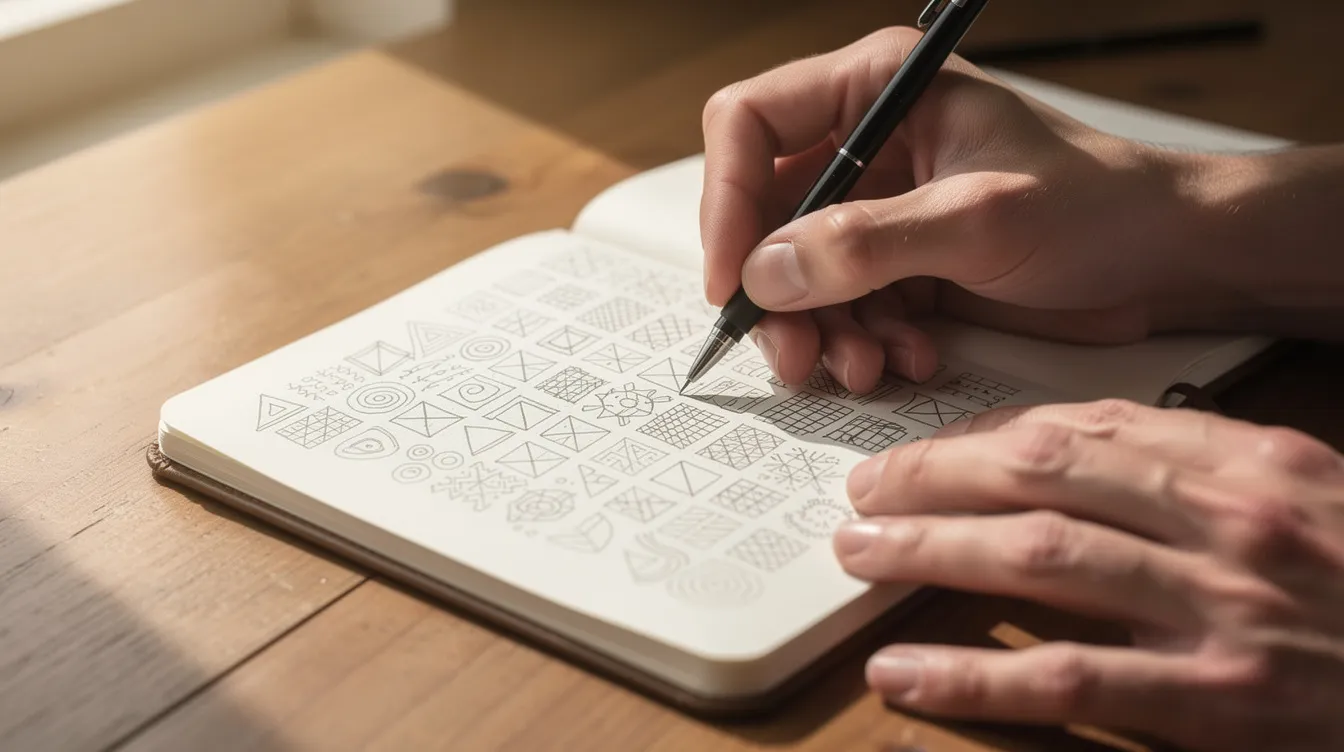
Pattern work is where I started and my favourite way to begin, because there is no decision about what the drawing is of. Repeated marks fill a small page quickly. Try inventing one new pattern each session and placing patterns inside simple shapes like circles or leaves.
Drawing simple tangle patterns needs only a pen and a few minutes. For beginners who want the basics, this is the gentlest entry point I know.
What I Draw When I Feel Stuck
Staring at a blank page has ended more of my evenings than tiredness has, so I decide the subject in advance. I look around my immediate surroundings, choose one ordinary object from the kitchen, or use a reference photo for observation practice. Drawing prompts help avoid facing a blank page, and I keep a short prompt list at the back of my sketchbook. If I still hesitate, I just dive into one prompt instead of waiting to feel ready.
Drawing What I See
Guide your eye toward basic shapes within familiar objects and notice edges before adding details. Observational drawing trains recognition of shapes, proportions, and details. Drawing what you see enhances observational skills more than copying from imagination, and observation skills enhancement improves because sketching forces critical visual engagement.
I sometimes draw the same object every day for a week to see how my sketch changes as I notice new things.
Drawing New Things
Challenge yourself to choose an unfamiliar subject each week. Plants offer varied shapes, household objects under different lighting reveal new shadows. Exploring new things keeps your creativity flowing and the routine fresh.
Automatic Drawing Prompts
Set a two-minute timer, move the pen freely without a plan, and do not judge the result. Using prompts can alleviate decision fatigue in daily drawing. Automatic drawing encourages creative meditation, and when time is up, look for accidental shapes within the finished page. You will find ideas you would never have planned.
How I Keep My Routine Relaxing
My rule: if the pen touched the page, the day is a yes. A scruffy page counts and a skipped page does not. Fostering low-pressure drawing helps remove intimidation from starting new pieces, and reduced performance anxiety occurs when drawing is treated as low-pressure. Leave room for playful experiments. Some of my favourite pages were fun accidents.
My Drawing Journal
Date every page for easy progress tracking. Write one sentence about each session and note which tools felt comfortable. If you share your work, a few images from sketch to finished piece can document your process. Daily drawing builds a visual chronicle of ideas and artistic evolution, and those dated pages become a quiet record of where you have been.
My Gentle Progress Tracker
My whole system is a tick on the fridge calendar, with no hours counted and no grading. Track completed sessions rather than artistic quality. Using a simple calendar or app to track drawing streaks enhances motivation, and measurable progress tracking provides visual proof of confidence and style evolution. Visual momentum from tracking progress motivates continued drawing practices.
Review older pages at the end of each month. I leave the bad pages in the book and look for what I enjoyed doing, then do more of it. Noticing improvements in drawing skills boosts creative confidence over time.
How I Use Online Art Tutorials Carefully
I use videos selectively and choose one focused lesson at a time, then practise its skills before collecting more lessons. I watch a lesson, try the exercise for several days, then browse for the next one. Adapt every exercise to your own interests. If a lesson shows a tree and you prefer mugs, draw mugs, and if tutorials start to feel isolating, friendly online community spaces can offer a bit of encouragement.
What I Look for in Lessons
Prioritise beginner-friendly demonstrations with clear practice steps. I avoid lessons that make drawing feel competitive or push you to post polished artwork on Facebook for feedback. Look for a tutor who shows the process, not just the result, and whose tone feels like encouragement rather than pressure.
How I Handle Difficult Drawing Days
Losing motivation during a creative routine is normal. Suggest reducing the session instead of quitting, or changing the subject when frustration appears. Daily practice helps transition from a perfectionist to a more relaxed mindset, but that shift takes time.
My rule is never to miss twice in a row. After a skip, the next evening is the smallest version: one line, five minutes. I do not draw double to make up for it. Over 400,000 creators use Sketch a Day for daily drawing, and I suspect most of them have bad nights too. Missing one day changes nothing.
When I Need a Rest
Wrist pain, eye strain, and deep fatigue all call for a break. Step away from the page without guilt. I once had a week of nothing, from a cold, a busy library roster, and a family trip. Return when drawing feels inviting again. Habit research confirms that occasional misses do not derail the process.
My Invitation to Try Daily Drawing
The smallest starting point is this: one pen, one page, ten minutes tonight. Ten minutes of drawing daily yields significant progress, and daily drawing improves skills over time whether you feel it happening or not. You do not need to download a great app with new features and bug fixes, or pin a fancy home screen reminder to your device. A pencil and a piece of paper will do fine.
Experiment with new things without seeking perfection. Try a pattern, a blind contour of your hand, a sketch of whatever is on the bench. Submit nothing to anyone. Create for yourself.
Nothing here needs talent, only a small, steady, slightly boring routine that has kept me drawing through three winters. I hope it works for you too.
FAQ
How long does it take to make daily drawing a habit? No exact number. Studies suggest habits become automatic in roughly two to five months, with a median around 59 to 66 days. For me it felt settled after a few months, though tired nights still needed a choice.
How much time should I spend drawing each day? Ten minutes, aimed at your worst day rather than your best. A small amount done consistently matters more than an ambitious session done once.
What should I draw if I have no ideas? Objects nearby or pattern work, plus a short prompt list at the back of the sketchbook. A photo reference, a canvas of doodles, or a blind contour of your own hand all work when inspiration is low.
Do I need expensive supplies? No. A basic sketchbook and one reliable pen or pencil are enough. The world of art supplies is amazing to browse but not required to explore on day one.
What if I miss a day, or a week? Draw something tiny the next day and carry on, without catching up. One skip does not break the habit. It never has for me.