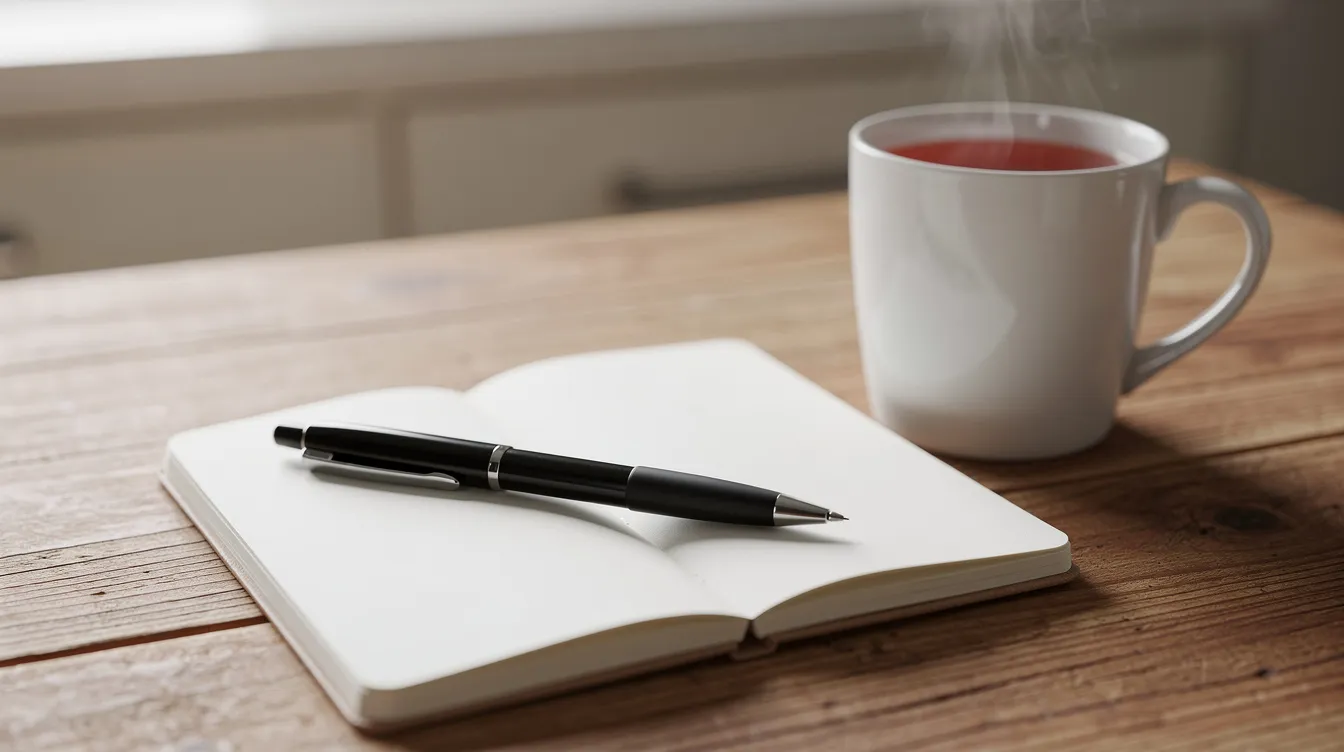
Most evenings I sit at my kitchen bench in Hobart after the dishes are done, pick up a pen and draw for ten to twenty minutes. That is drawing meditation as I practise it, and this article is a plain guide to getting started.
What Is Drawing Meditation?
Drawing meditation is what happens when you merge meditation with creative drawing. Some people call it mindful drawing or meditative drawing. The idea is simple: you make slow, repeated marks on paper and rest your attention in the present moment instead of chasing a finished picture. Mindfulness is about being fully engaged in the present moment without judgment, and drawing gives that attention somewhere physical to land.
In my version there is no subject to get right and no one to show it to. Drawing meditation uses repetitive lines, shapes, or patterns to anchor attention in the present moment. When my mind drifts to tomorrow’s library shift, I bring it back to the pen, much like following the breath, except I end up with a page of marks. Meditative drawing emphasizes the process over the final artwork. Drawing meditation can be practised by anyone regardless of their drawing experience. You need a pen and scrap paper, and five to ten minutes is enough at the beginning.
A few key points before we go further:
-
Meditative drawing merges meditation with creative drawing
-
The aim is awareness and calm, not a beautiful result
-
You do not need drawing skills or artistic skills
-
I am a hobbyist, not a therapist or meditation teacher, and I use the word meditation loosely. This is a personal practice, not medical advice, and I make no claims about what it does for body or mind
Why Try Meditative Drawing?
After a long winter day at the Hobart library, I came home with my head full of overdue notices and a leaking ceiling in the children’s section. I sat down, drew small loops for ten minutes, and by the time the kettle clicked off the anxious thoughts had quietened. Not vanished, just quietened. That is the most I promise.
Meditative drawing alleviates anxiety and stress. It enhances emotional regulation through artistic expression and sharpens focus and concentration. Completing art, even a small page of circles, boosts self-esteem and provides a sense of fulfilment. This practice encourages mindfulness and presence in the moment. Repetitive drawing movements provide a calming activity and help lower stress, and simple, creative movements in drawing can help calm the mind and relax the body. Benefits of drawing meditation include improved mindfulness, concentration, and self-awareness. Repetitive, rhythmic drawing motions induce a gentle flow state that feels a bit like walking at an easy pace.
Some evenings my mind races the whole time and I still end up with a page of tidy little loops. The session is never wasted. Drawing meditation encourages emotional expression without needing to use words, which suits nights when I cannot find any.
Here are a few everyday moments where it fits:
-
A lunch break at work with a pocket notebook
-
The wait while the kettle boils
-
Winding down before bed instead of scrolling
What it feels like from the inside, in my experience: doing one thing at a time, a quieter background hum in the head, ten minutes passing quickly.
Getting Ready: Materials and Mindset
No special supplies are needed. Practising drawing meditation requires no artistic skill or expensive supplies. I use a cheap notebook with plain pages and one pen. My first pen was a lost property pen with a chewed cap. If you want something specific, a technical pen like a Staedtler Pigment 0.1 is nice for fine lines, but any fineliner or ballpoint works.
My opinion: pen beats pencil here because you cannot rub it out, so you stop judging each line. Drawing meditation helps release perfectionism by teaching that there are no mistakes. A wobbly line just becomes part of the page. I buy cheap notebooks so I never feel precious about spoiling them. If you prefer a softer mark, a pencil is fine too.
Here is what helps:
-
A clear patch of table, phone face down and on silent
-
A chair where your feet rest flat and your shoulders can drop
-
A timer set to ten minutes, because knowing you are allowed to stop makes it easier to begin
-
A cup of tea nearby if that is your nature
I put the kettle on first because it gives me a natural start. The key mindset is experiment rather than perform. Let mistakes stay on the paper. Forget about making something worth framing.
How to Start a Simple Drawing Meditation Session
Step 1. Sit comfortably and relax your body before drawing. Feet flat on the floor, hands on the table, shoulders dropped. Close your eyes for three slow breaths. Notice any tension and let it soften.
Step 2. Open your eyes and draw a rough border on the page. This gives your marks somewhere to live and removes the blank page problem. Start with simple shapes or patterns to ease into drawing.
Step 3. Choose one repeating mark: small circles, a wavy line, short dashes. Nothing clever. Focus on the pen’s movement and your breath while drawing. Draw it slower than feels natural, about half your usual speed. Notice the pen’s weight, the paper’s texture, the small sound of the nib.
Step 4. When your mind wanders, notice it, name it gently and return to the next mark. The returning is the practice, not a sign it is going wrong. You can practise mindfulness every time you bring your attention back.
Step 5. When the timer sounds, pause. Ask yourself: how does my body feel now compared with a few minutes ago? Look at the page for a moment without grading it, then close the notebook. That is the whole drawing process.
Five Meditative Drawing Exercises to Explore
Here is a small toolbox of meditative drawing exercises to rotate through on different days. Each takes five to fifteen minutes, one pen and one sheet of paper. Pattern drawing is how I began, with a borrowed book and that library pen.
-
Breath Lines: Draw slow horizontal lines that rise slightly on the in-breath and fall on the out-breath. Keep your attention on the pen’s motion. The lines will wobble and that does not matter.
-
Awareness Circles: Fill a page with overlapping circles, placing each one consciously while staying aware of the whole page. Drawing circles can enhance attention and awareness.
-
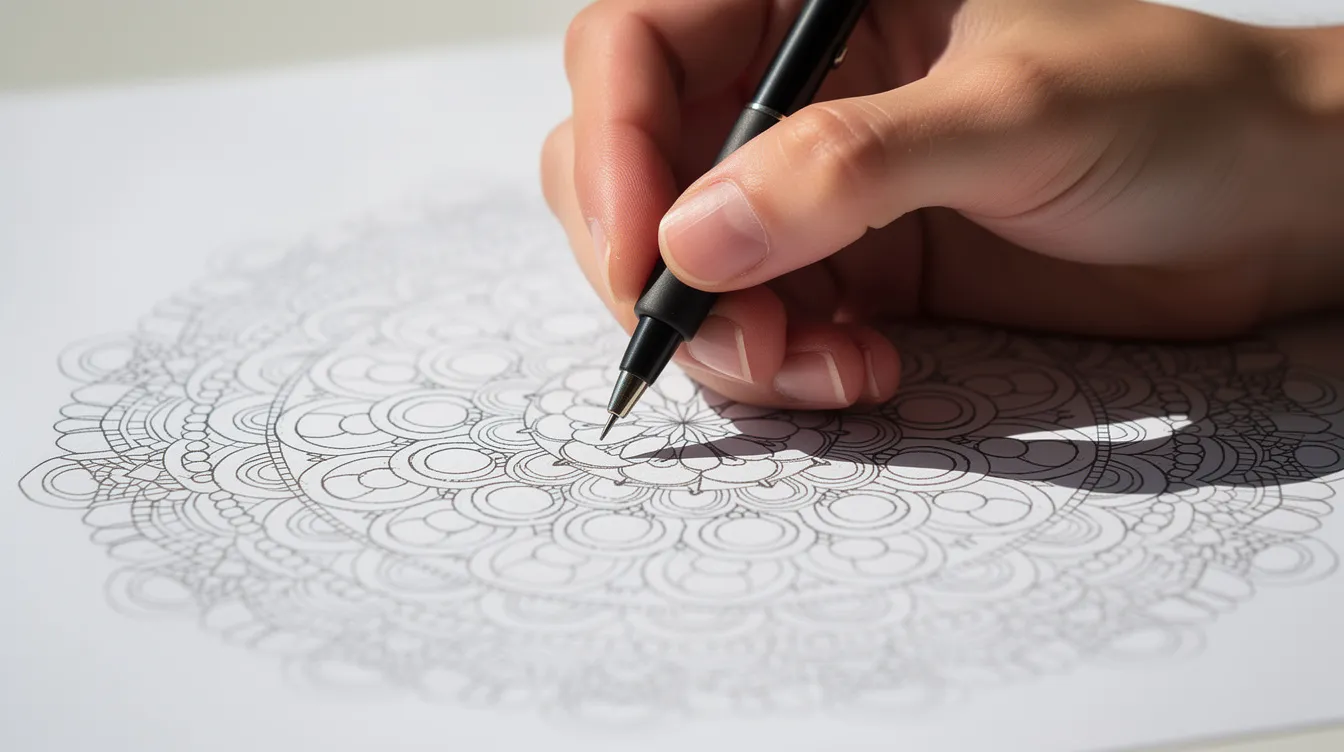
Drawing Mandalas: Begin at a central point and add simple rings of shapes outward. A mandala symbolises wholeness and unity in art. Drawing mandalas can enhance emotional expression, self-soothing, relaxation and mindfulness. Mandalas are often used in meditation for relaxation and can promote emotional expression and calmness. Process matters more than symmetry.
-
Spiral Focus: A gentle spiral growing outward from a central dot. Breathe steadily and notice where lines almost touch. Spiral drawing aligns body, mind and breath during practice.
-
Mood Map: Turn a feeling from the day into marks and emotions on paper, then add calmer, slower shapes around it as breathing space.
Zentangle is worth a look if you want a structured, step-by-step version of pattern drawing. Zentangle involves creating structured patterns called tangles on small paper tiles, and it requires no artistic background to practise. The same thinking applies if you invent your own patterns. I have written about how zentangles work and how to start if you want more detail.
Mindful doodling is a form of drawing meditation that involves creating simple, repetitive patterns, and it can feel like fun once you relax into it. Blind contour drawing encourages focus on the subject while drawing without looking at the paper, which is a slow variation you can try on a real object like a mug or leaf with no aim of a good likeness. Continuous line drawing is done without lifting the pencil from the paper to emphasise flow, another technique worth trying. For a quick background, see this overview of contour drawing.
Mindful Drawing, Presence, and Everyday Life
The attention you develop on a page can show up elsewhere. I notice it while washing dishes, which is exactly when my evenings start. Mindful drawing trains you to notice the start and end of each line, small urges to rush, flickers of irritation. These mirror habits off the page. The pen tip, the breath and the sound of the line are simple anchors for the present moment, and you stay connected to what is happening right now rather than drifting into the world inside your head.
Over three winters of drawing my experience has been quiet and modest, not dramatic. A small stretch of each day spent doing one thing at a time, which lets me relax into the evening instead of carrying the day’s stress to bed. It is not sculpting or painting or any grand creative act. It is just a pen and a page. But it helps me engage with the calm that is already there once I slow down enough to feel it.
Everyday moments to try it:
-
A few minutes of pattern doodling before opening email
-
Circles while dinner simmers
-
A small pocket notebook at a lunch break or while waiting
Gentle Tips for Keeping a Calm Drawing Habit
Attach drawing to something you already do. For me it is the evening cup of tea. Start with a small commitment such as five minutes on weeknights. Four or five evenings a week is plenty, and a missed night is no problem. This is not a self-improvement project. I have more on building a daily drawing habit that lasts.
Keep a simple notebook as a drawing diary so you can explore patterns over time, not to judge quality. Some of my pages go in the recycling after a week, and a few I keep for pattern ideas. You do not need to achieve anything in particular with them. If you want ready-made starting points, try these simple sketchbook prompts.
Common obstacles and what I do about them:
-
Boredom: Switch exercises. Try a spiral one night and a mandala the next.
-
Self-criticism about ugly pages: Use pen so you cannot erase. Erasing seems to reduce the peace of the session.
-
Spending half the session deciding what to draw: Pick one exercise from the list above and start immediately. The plainest prompts work best, like “draw twenty small circles.”
-
Believing only every single day counts: It does not. I kept going through a few flat weeks by keeping the bar low, because five minutes counts.
If you are a creative person who likes community, you can preview post reply threads on mindful drawing forums to connect with others and develop your practice alongside them. Creating art in quiet company, even online, can bring its own joy.
Try one very small exercise tonight. You need a pen, a piece of paper and ten minutes. Mindful drawing, meditative drawing exercises and drawing mandalas are all different doors into the same quiet place. Pick whichever one you like and see how you feel when the timer goes off. That is the whole beginning.
FAQ
Do I need to be good at drawing to try this? No. The practice relies on simple, repeated marks, so skill barely matters. If you can draw a line or a circle, you can do it. You do not need to be any kind of creative person to concentrate on a pen moving across paper.
How long should a session be? Start with ten minutes. Many evenings I do twenty, but I never plan beyond what feels easy. A short session you actually do beats a long one you skip.
Is this the same as doodling? They overlap. The difference is mostly intention: you sit down on purpose, go slowly and keep attention on the pen. You become immersed in the marks. Doodling often happens with your mind elsewhere and that is fine too, but the meditative state comes from deliberate attention.
What if my mind will not settle? That is normal, and mine often does not either. Return to the next mark each time you notice a wandering thought. Some traditions treat this as a spiritual practice in itself: the returning, not the stillness, is what matters.
What pen is best? Any pen you do not mind using up. A cheap fineliner or ballpoint is ideal. I prefer ink because it stops me erasing and fussing, but a soft pencil works if you prefer it.